B2B SAAS · CLOUD OPS · FACILITIES

Enterprise Energy Management Platform

A concept design that closed enterprise deals — then became the product.
Role
Sole Product Designer
Team
2 Software Engineers, Stakeholders
Timeline
Dec 2025 – Feb 2026
Platform
Web & Mobile
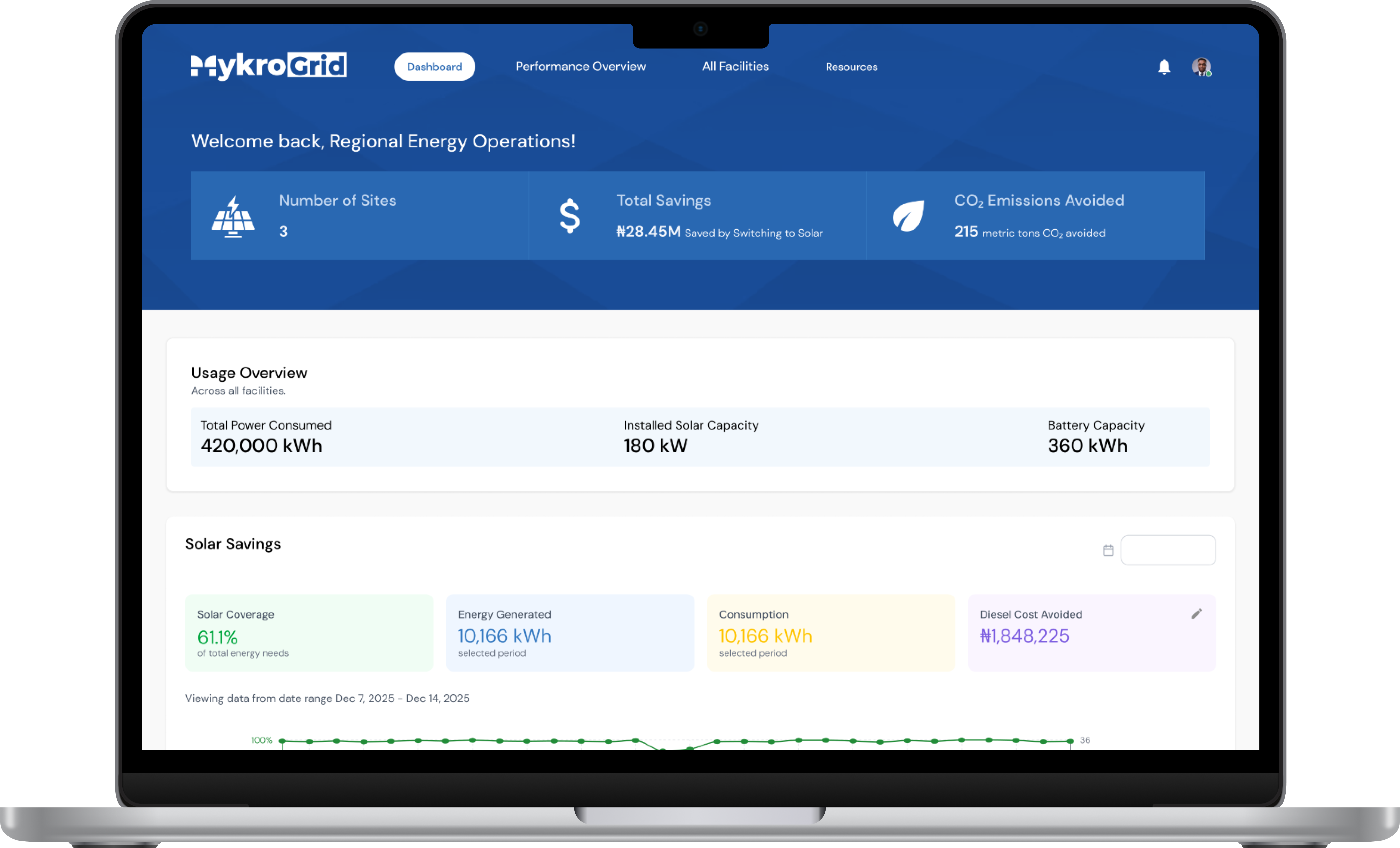
Enterprise Energy Management Platform dashboard

OVERVIEW

01

The Brief

Design an enterprise energy management platform for MykroGrid — a cloud operations and facilities monitoring tool giving energy teams a single pane of glass for site health, alarms, and interventions across multiple facilities.

02

The Problem

MykroGrid had no platform to offer enterprise clients managing multiple facilities. Without a product to show, closing larger deals was nearly impossible. Internally, our own engineers were managing grids manually with no standardized workflow, no historical record, and no remote visibility.

03

The Outcome

A concept design used to pitch and close enterprise clients — built on real insights from our own field engineers — pushed directly into development once deals were signed and now live across multiple facilities.

THE PROBLEM

The Challenge

01

No Product to Show

MykroGrid was pitching enterprise clients with no platform to demonstrate. Deals stalled without a tangible product.

We needed something real enough to close deals, built on real enough research to actually work.
02

Complex Multi-Facility Needs

Enterprise clients manage multiple facilities with different energy profiles, alert thresholds, and operational teams.

One dashboard had to serve many contexts — informed by engineers who work across multiple grid sites daily.

03

Mission-Critical Reliability

Energy operations can’t afford missed alerts or confusing interfaces. The design had to prioritize clarity above all else.

In energy infrastructure, a missed alert isn’t a UX problem — it’s an operational failure.

COMPETITIVE LANDSCAPE
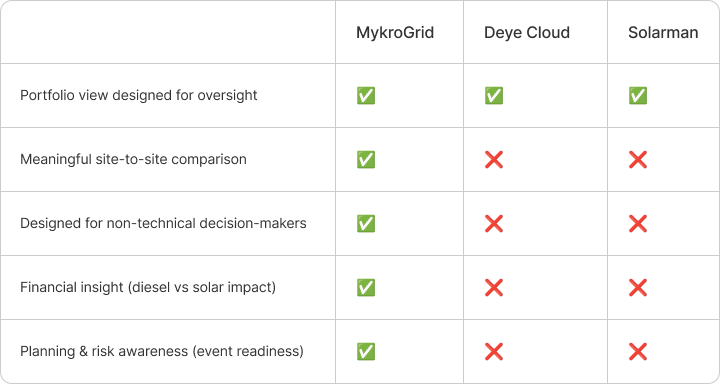
Competitive analysis: MykroGrid vs Deye Cloud vs Solarman

WHAT WE SET OUT TO DO

Three Goals. One Platform.

GOAL 01

Clarity

Give energy teams a single pane of glass for site health, alarms, and interventions across all facilities.

GOAL 02

Speed

Design and ship fast enough to support active enterprise sales conversations.

GOAL 03

Scale

Build a foundation flexible enough to serve clients with one facility or twenty.

HOW WE GOT THERE
Discovery to Delivery

STEP 01

Research & Discovery

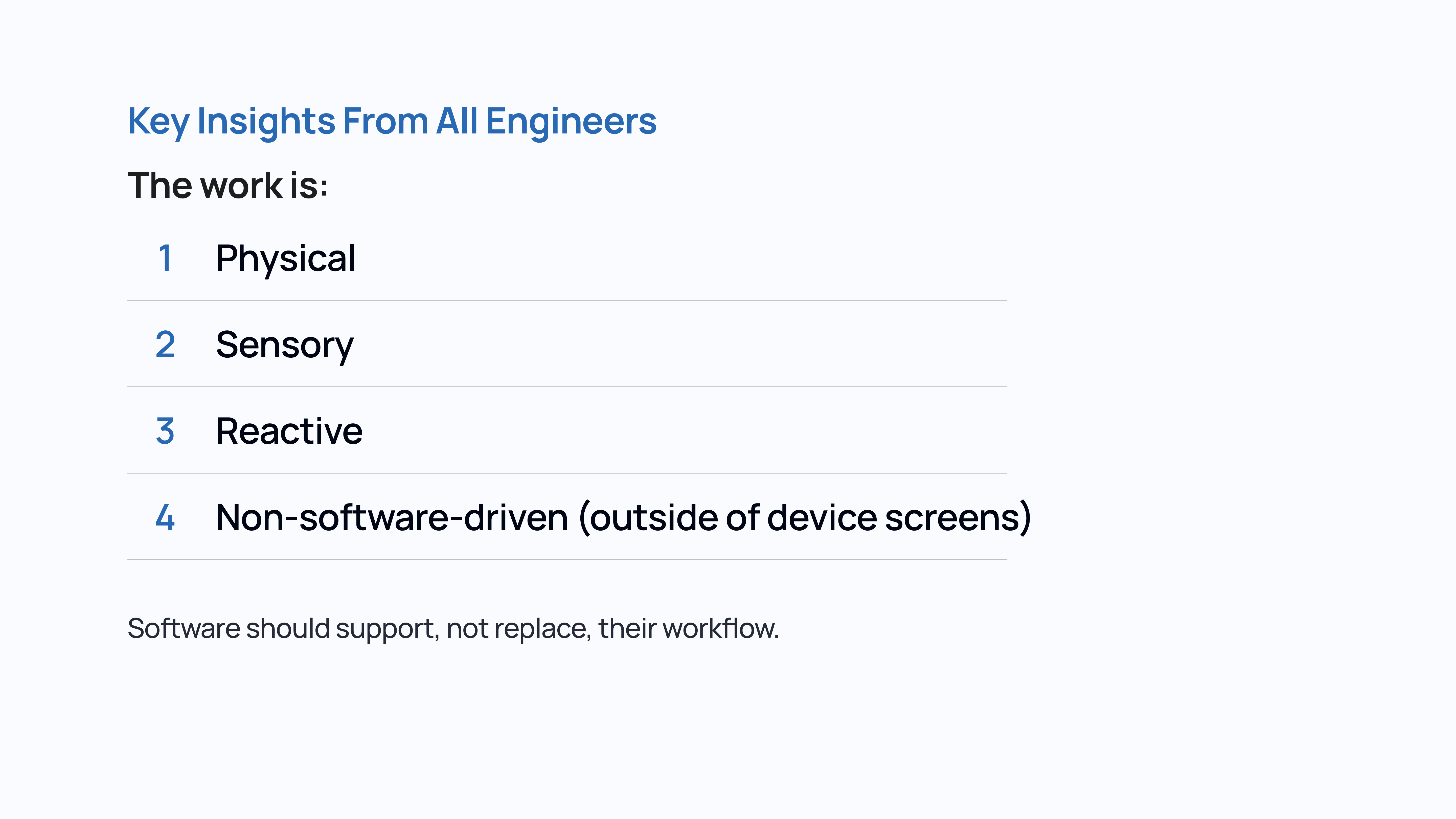
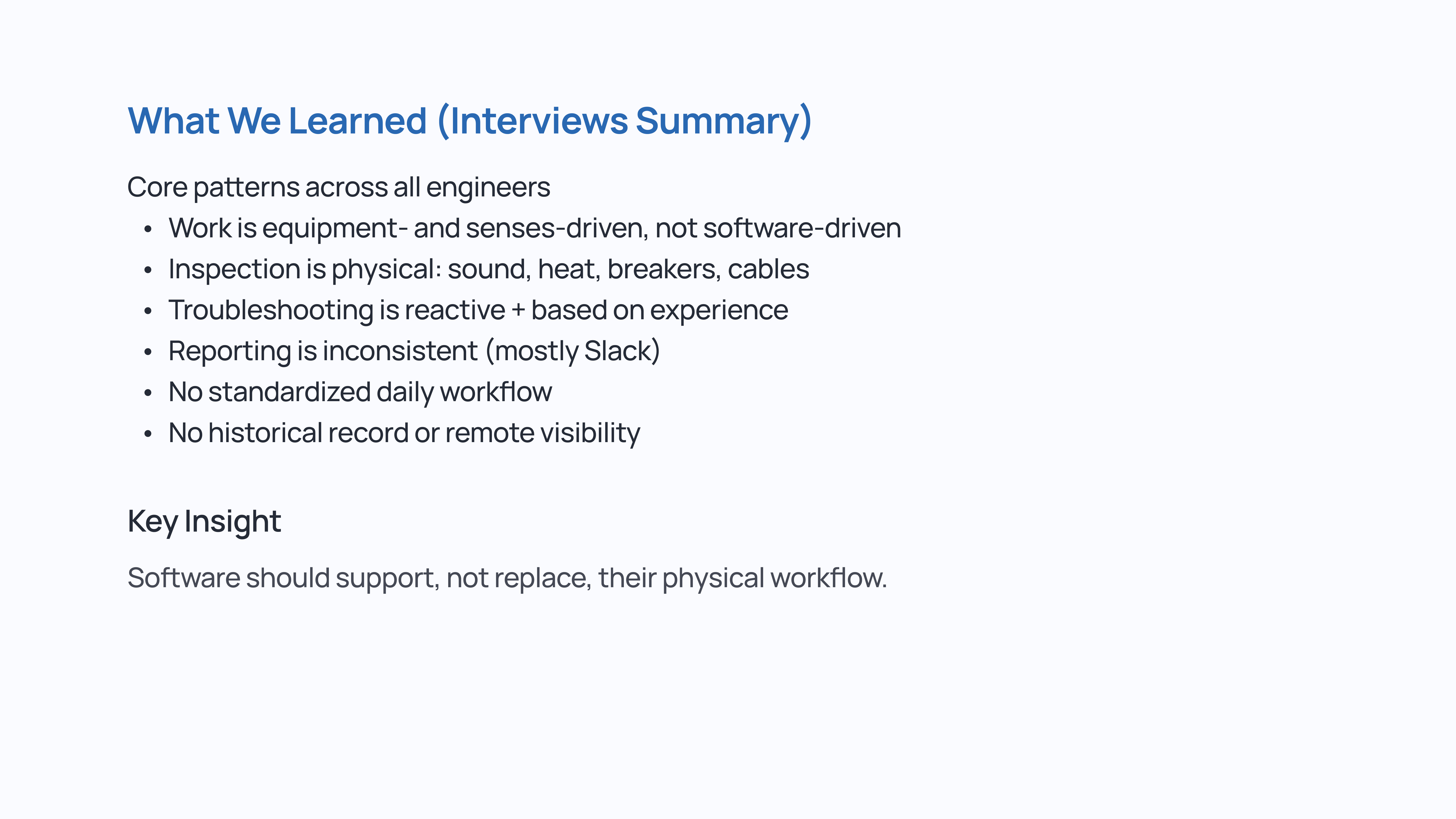
Conducted interviews with MykroGrid’s own site engineers — Samson, Alabi, and Gospel — to understand how energy monitoring actually works on the ground. Core patterns emerged: work is physical and senses-driven, troubleshooting is reactive and experience-based, reporting is inconsistent, and there is no standardized daily workflow or remote visibility. Key insight: software should support, not replace, their physical workflow. These findings became the foundation for the Enterprise platform’s information architecture and feature prioritization.

What we learned from engineer interviews Key insights from site engineer research

STEP 02

Persona Development

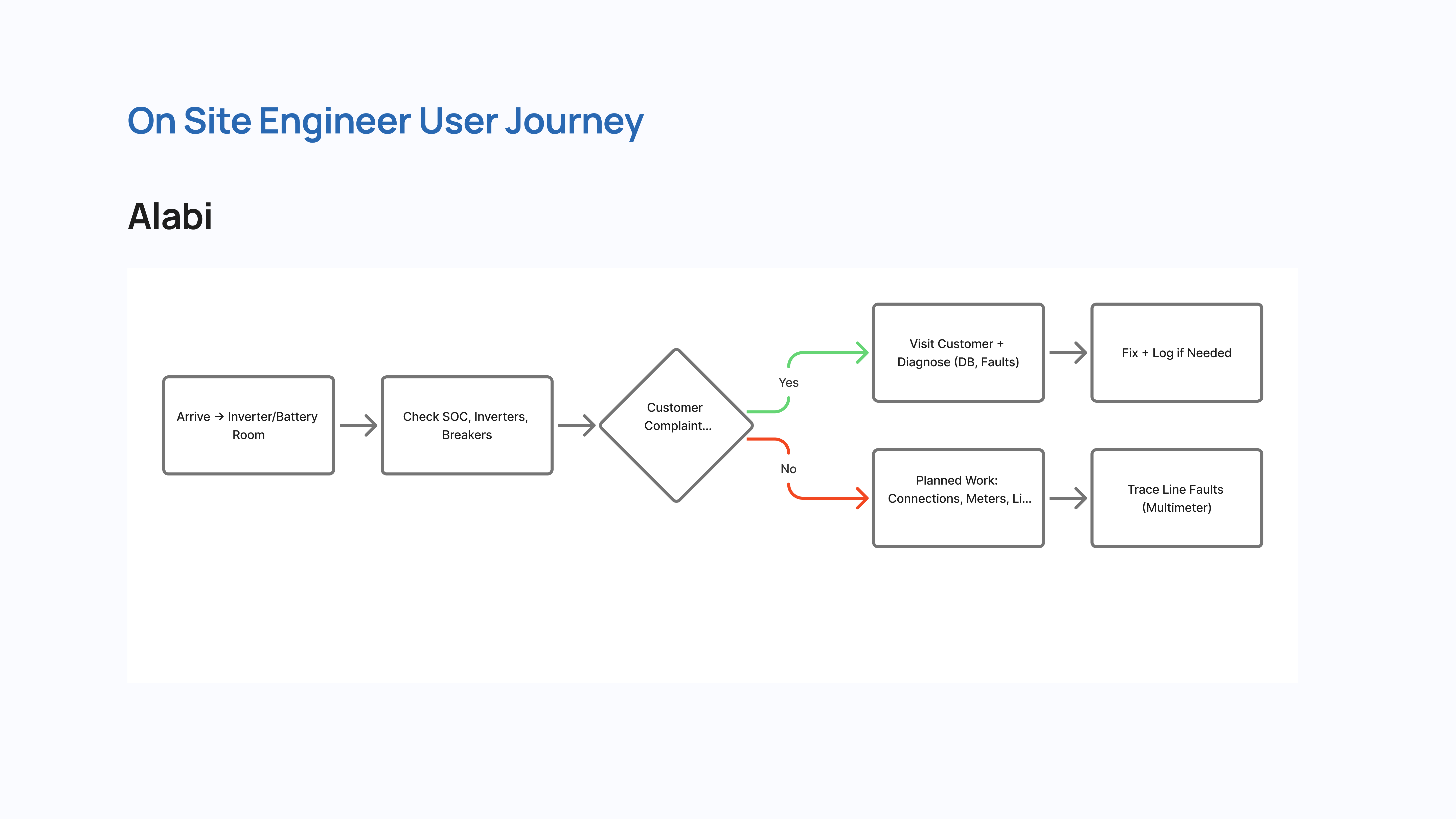
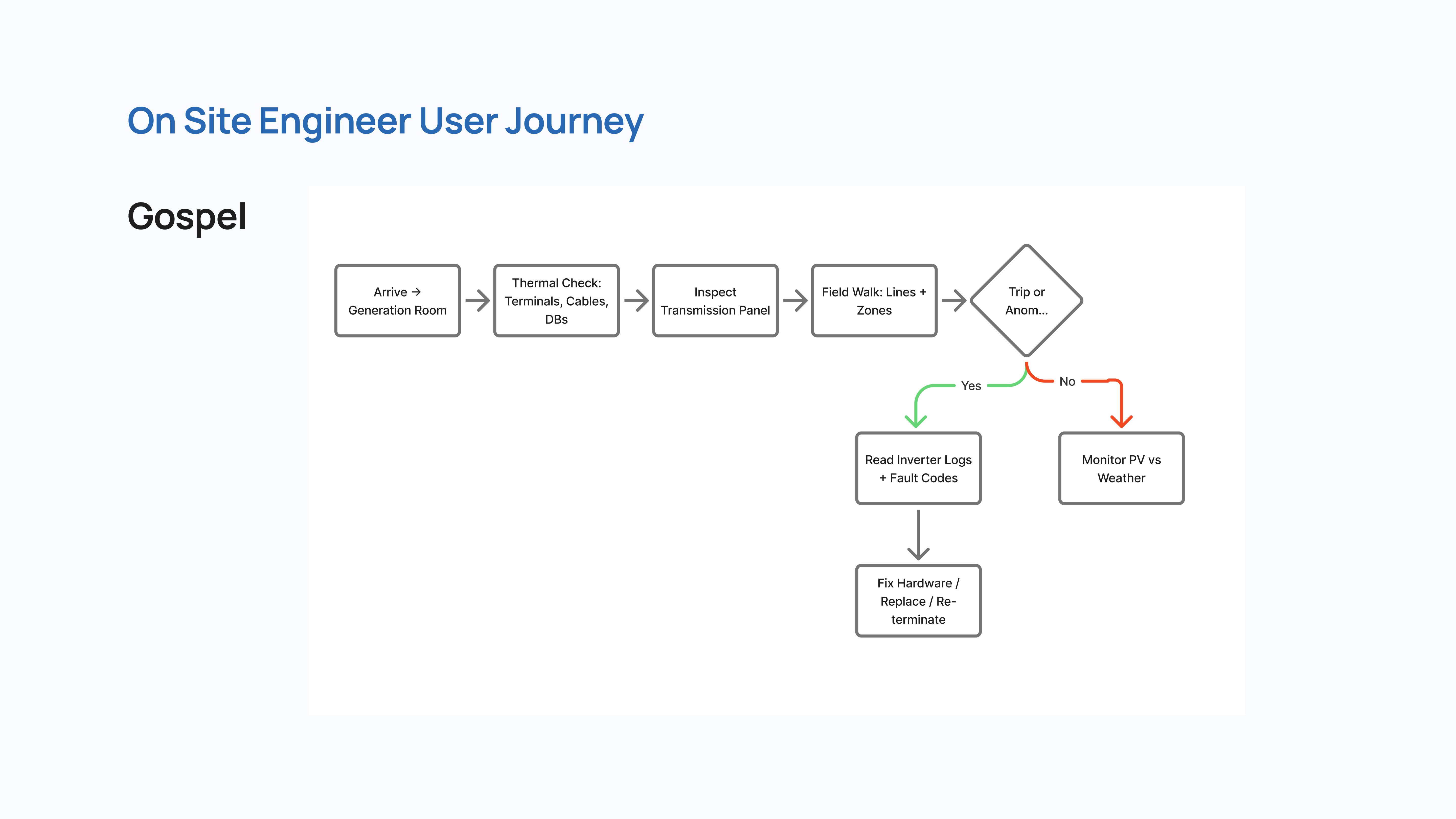
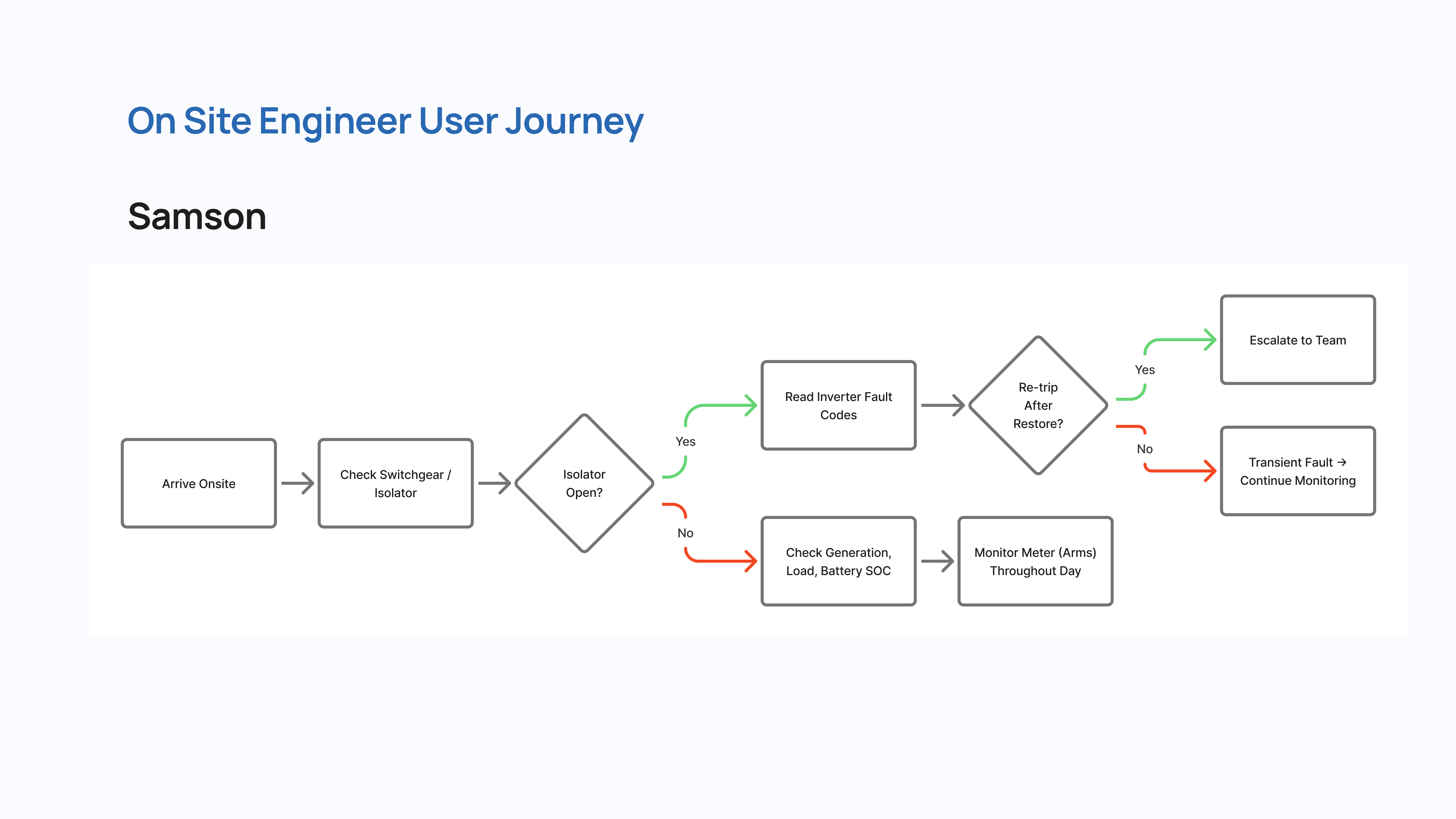
Built detailed user journeys for each engineer based on interview findings — mapping their morning startup routines, mid-day monitoring habits, troubleshooting workflows, and end-of-day checks. Each engineer had a distinct approach: Samson focused on switchgear and inverter checks, Alabi prioritized customer complaints and line tracing, Gospel led with thermal checks and field walks. These three journeys defined the three core user types the platform needed to serve: the hands-on site engineer, the reactive troubleshooter, and the field inspector.

Samson - Site Engineer user journey Alabi - Site Engineer user journey Gospel - Site Engineer user journey

STEP 03

UI Design & AI-Assisted Workflow

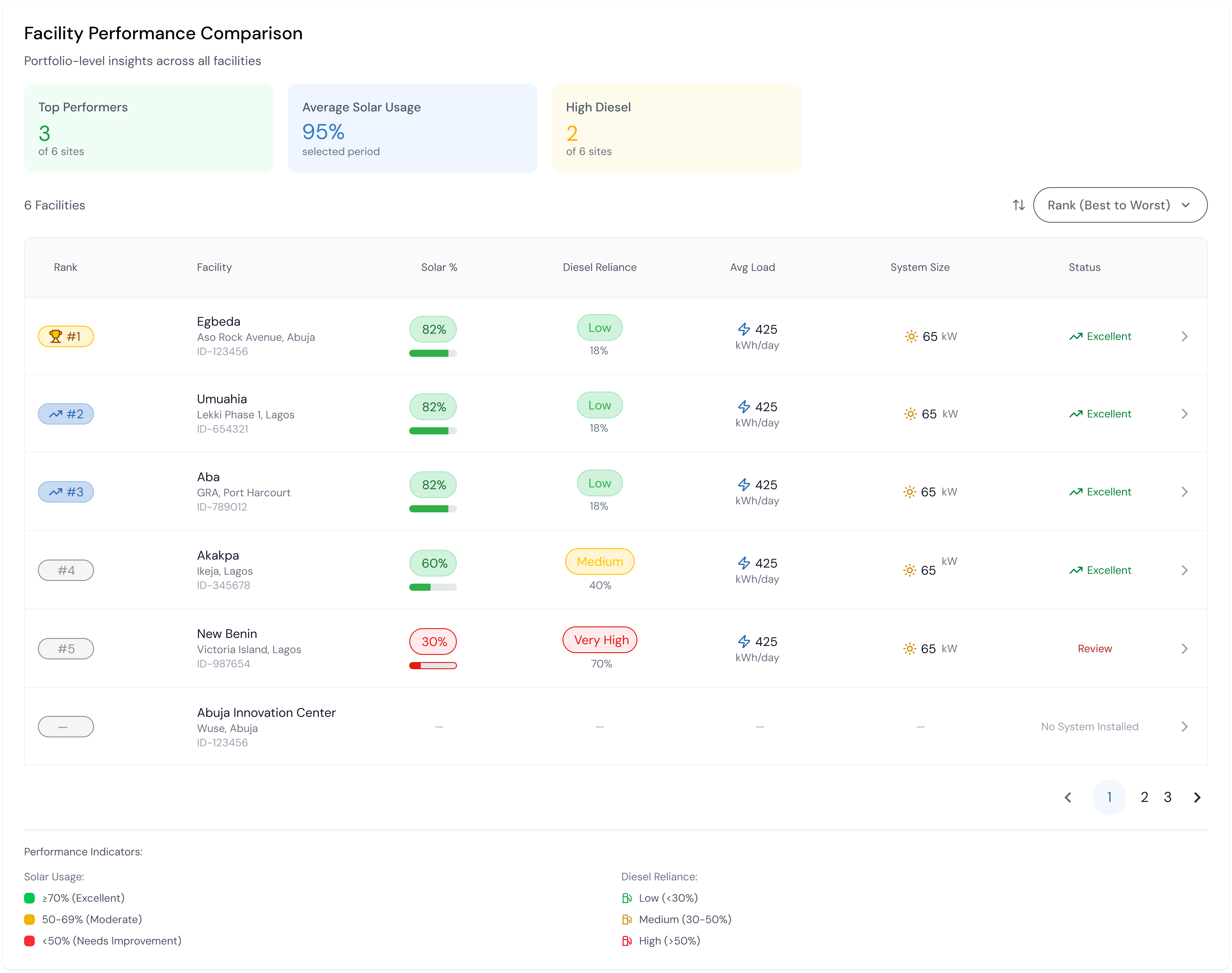
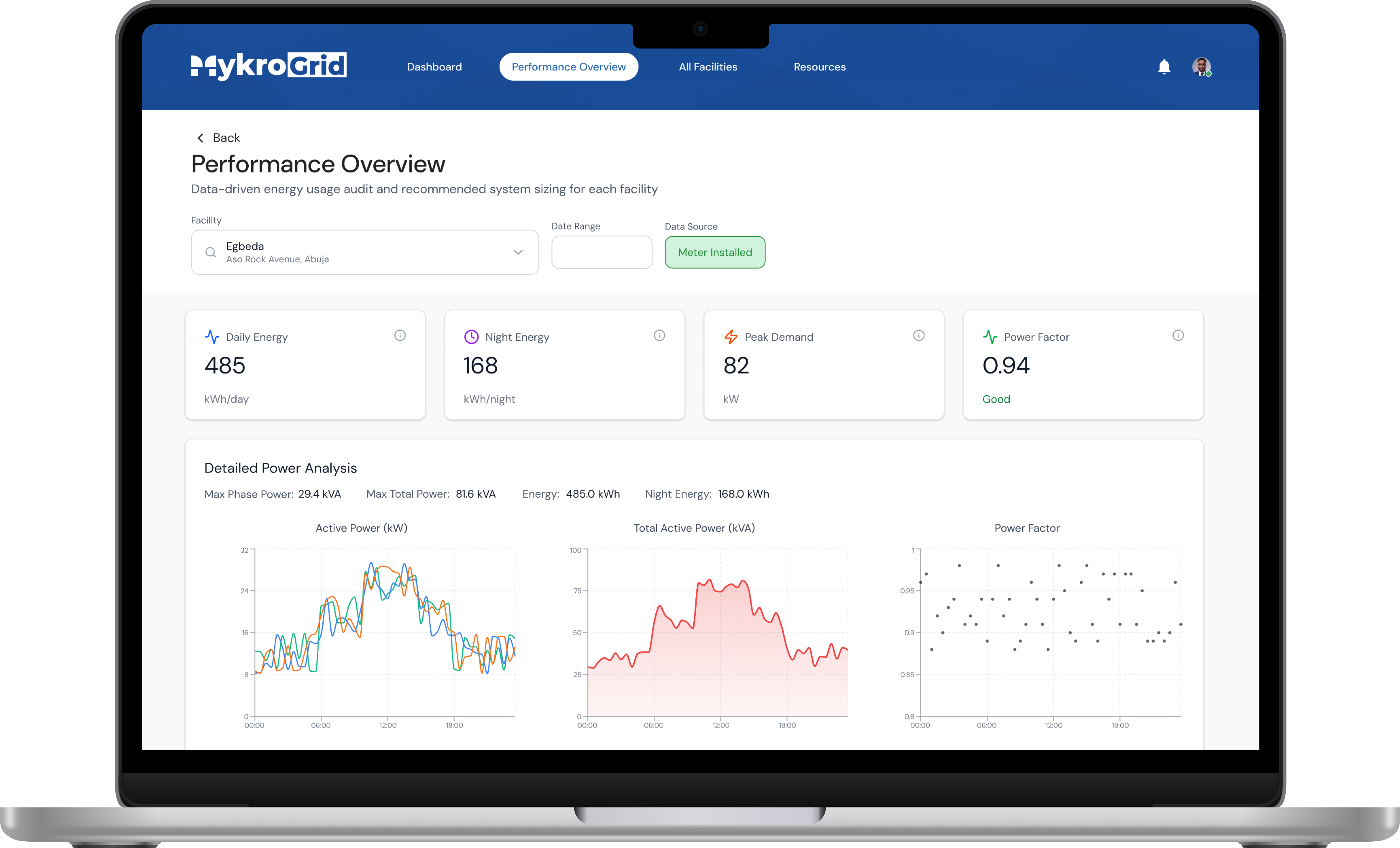
Designed the full platform UI — dashboard, alert management, facility overview, and reporting — with the engineer workflows at the center. The future state journey informed key design decisions: a big screen view for arriving engineers to see all alarms at a glance, auto-generated tasks tied to each alarm type, and a daily checklist that builds an operational history over time. Used an AI-assisted product workflow for research synthesis, UX copy, and rapid concept generation, significantly accelerating the design process.

Enterprise Energy Management Platform UI design

STEP 04

Handoff & Iteration

Prioritized desktop given timeline constraints, providing detailed mobile guidance for key screens where engineering needed more direction. The research phase — interviews with real engineers doing real work — meant design decisions were grounded in operational reality rather than assumptions. Worked directly with engineers Kene and Oke through handoff, iterating based on technical constraints and stakeholder feedback from the enterprise sales process.

Enterprise Energy Management Platform developer handoff

THE RESULT

From concept to enterprise product

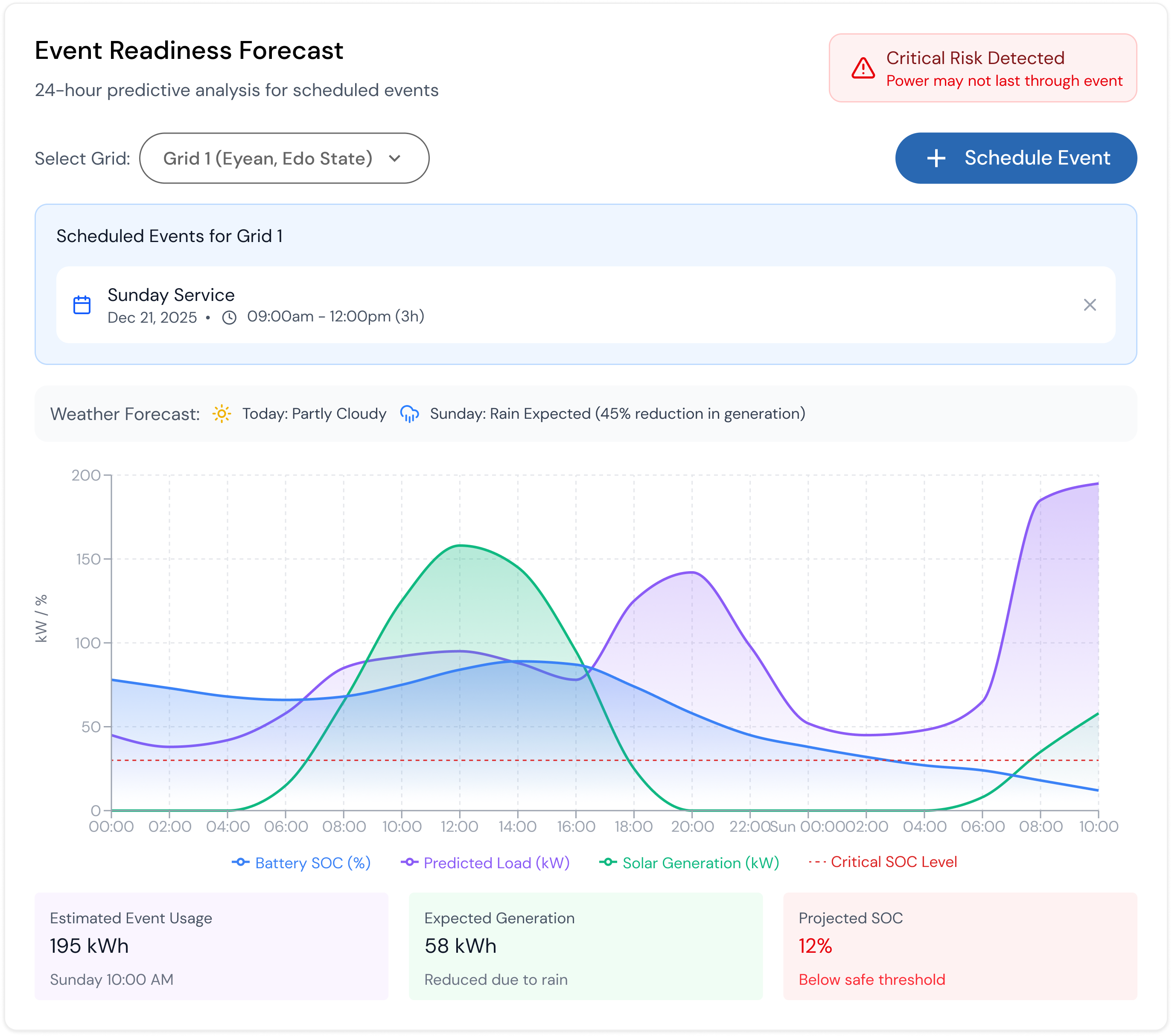
Designed a cloud operations and facilities monitoring platform giving energy teams real-time visibility into site health, alarms, and infrastructure performance.

  • Built persona-driven navigation that serves field engineers, operations managers, and executive stakeholders from one interface.
  • The concept design was used directly in enterprise sales pitches — once deals closed, it went straight into development.
  • Now live and in use across multiple enterprise facilities.
Enterprise Energy Management Platform solution

OUTCOMES

What shipped

Enterprise deals closed

The concept design was used to pitch and close enterprise clients before a single line of code was written.

Concept to production

Once deals were signed the design went directly into development — now live across multiple facilities.

Scoped under pressure

Delivered a full platform design in under 3 months, prioritizing desktop with targeted mobile guidance for key screens.

LOOKING BACK
What I learned

  • Designing for sales as much as for users was a new constraint — the platform had to be convincing to a stakeholder in a pitch AND usable by an engineer in the field.
  • Working under tight timeline pressure forced better scoping decisions — desktop first, mobile guidance where it mattered most.
  • Collaborating directly with engineers Kene and Oke from early on meant fewer surprises at handoff and a more faithful build.
Back to case studies